Diabetic Eye Disease (retinopathy)
What is diabetic eye disease?
Diabetic eye disease refers to a group of eye problems that people with diabetes may face as a complication of diabetes. All can cause severe vision loss or even blindness.
Diabetic eye disease may include:
- Diabetic retinopathy—damage to the blood vessels in the retina.
- Cataract—clouding of the eye's lens. Cataracts develop at an earlier age in people with diabetes.
- Glaucoma—increase in fluid pressure inside the eye that leads to optic nerve damage and loss of vision. A person with diabetes is nearly twice as likely to get glaucoma as other adults.
What is diabetic retinopathy?
Diabetic retinopathy is the most common diabetic eye disease and a leading cause of blindness in American adults. It is caused by changes in the blood vessels of the retina.
In some people with diabetic retinopathy, blood vessels may swell and leak fluid. In other people, abnormal new blood vessels grow on the surface of the retina. The retina is the light-sensitive tissue at the back of the eye. A healthy retina is necessary for good vision.
If you have diabetic retinopathy, at first you may not notice changes to your vision. But over time, diabetic retinopathy can get worse and cause vision loss. Diabetic retinopathy usually affects both eyes.
What are the Types of Retinopathy?
- Non proliferative retinopathy, or background diabetic retinopathy, is an early stage of diabetic retinopathy. In this stage, very small blood vessels in the retina leak blood or fluid. Many people with diabetes have non-proliferative diabetic retinopathy yet retain excellent vision. When vision is affected it is usually the result of macular edema.
- Macular edema is a swelling of the macula, the region of the retina that allows us to read fine print. The swelling is caused by an accumulation of fluid that has leaked from damaged retinal blood vessels. Vision loss may be mild to severe depending on the amount of leakage.
- Proliferative diabetic retinopathy is present when abnormal new blood vessels begin growing on the optic nerve or on the surface of the retina. This occurs in response to poor circulation in the eye and the lack of oxygen delivered to the cells. These new blood vessels actually do not reestablish circulation in the retina and thus cause more harm than good. Proliferative diabetic retinopathy can cause visual loss.
- Vitreous hemorrhage occurs when the fragile new vessels bleed into the center of the eye. The inside of the eye is normally filled with a clear, jelly-like substance called vitreous. Symptoms vary depending on the amount of blood that mixes with the vitreous in the eye; it can vary from a few dark floaters to near blindness of one eye. The hemorrhage may take days to months to reabsorb. If it does not clear up on its own, a surgical procedure called vitrectomy may be indicated. The visual prognosis is good if there is no damage to the macula.
Causes and Risk Factors
How does diabetic retinopathy cause vision loss?
Blood vessels damaged from diabetic retinopathy can cause vision loss in two ways:
- Fragile, abnormal blood vessels can develop and leak blood into the center of the eye, blurring vision.
- Fluid can leak into the center of the macula, the part of the eye where sharp, straight-ahead vision occurs. The fluid makes the macula swell, blurring vision. This condition is called macular edema.

Normal Vision
|

Same scene viewed by a person
with diabetic retinopathy |
Who is at risk for diabetic retinopathy?
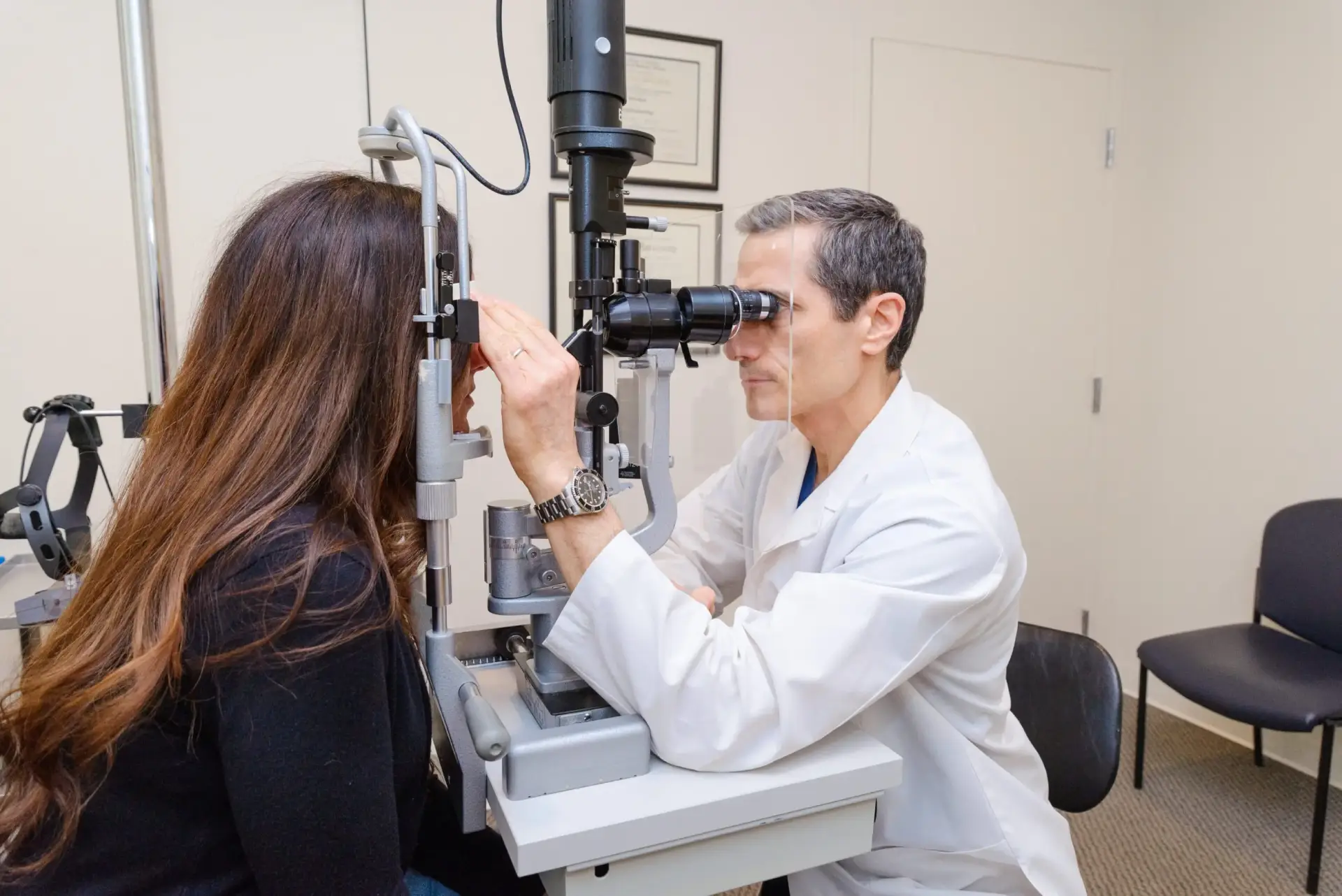
All people with diabetes--both type 1 and type 2--are at risk. That's why everyone with diabetes should get a comprehensive dilated eye exam at least once a year. The longer someone has diabetes, the more likely he or she will get diabetic retinopathy. Between 40 to 45 percent of Americans diagnosed with diabetes have some stage of diabetic retinopathy. If you have diabetic retinopathy, Dr. Fern can recommend treatment to help prevent its progression.
What can I do to protect my vision?
If you have diabetes get a comprehensive dilated eye exam at least once a year and remember:
- Proliferative retinopathy can develop without symptoms. At this advanced stage, you are at high risk for vision loss.
- Macular edema can develop without symptoms at any of the four stages of diabetic retinopathy.
- You can develop both proliferative retinopathy and macular edema and still see fine. However, you are at high risk for vision loss.
- Dr. Fern can tell if you have macular edema or any stage of diabetic retinopathy. Whether or not you have symptoms, early detection and timely treatment can prevent vision loss.
|